The idea of 'finishing' Spain in one trip runs against the country's nature: this is a sum of regions with separate languages, kitchens and clocks. Andalusia's Moorish palaces belong to one civilisation, the Basque coast to another cuisine, Galicia to another climate. The right strategy is choosing a region — and giving it time.
The common denominator is rhythm: late lunch, the evening paseo, streets that begin to fill at midnight. Adapting to Spain starts with setting your watch to Spanish time. Madrid, Barcelona and San Sebastián have their own city guides; this one is the map of the country route.
When to Go
April–June and September–October are the country's best windows. Summer strategy varies by region: the interior (Madrid, Seville, Córdoba) is a furnace in July–August — save Andalusia for spring or autumn; the north coast (Basque Country, Galicia) peaks in exactly those months. The festival calendar can shape plans: Seville's Feria (April), Pamplona's San Fermín (July), Valencia's Las Fallas (March) — all multiply room rates but deliver singular experiences. Winter is the calm season of Andalusia and the Canaries.
What to See & Do
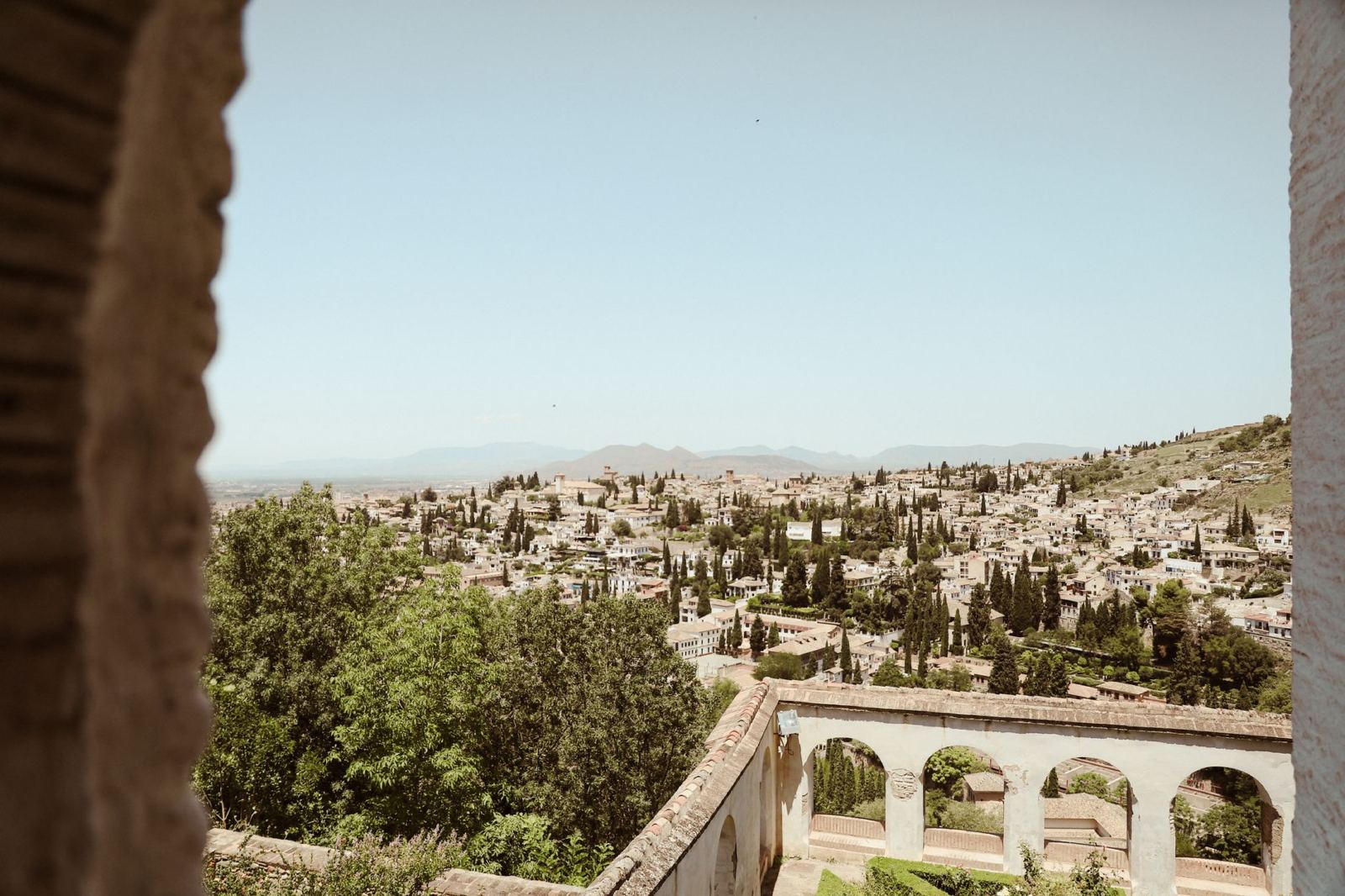
Andalusia is the densest route of a first Spanish trip: the Alhambra in Granada (book weeks ahead — the Nasrid Palaces are timed), the arch forest of Córdoba's Mezquita, Seville's cathedral-Alcázar-Santa Cruz trio and, that evening, an honest flamenco tablao. Ronda's gorge bridge and the roads between the white villages (pueblos blancos) are the region's connective tissue.
Castile's stones teach another lesson: Toledo's three-faith hilltop, Salamanca's golden university, Segovia's Roman aqueduct — all easy from Madrid. The northern route opens another Spain: Bilbao's Guggenheim, the pilgrim square of Santiago de Compostela and the mountain villages of the Picos de Europa.
On the east coast, Valencia — with its futurist City of Arts and Sciences and its claim as paella's homeland — is the rising star. The islands are trips of their own: Mallorca's Tramuntana mountains, Ibiza's coves, the Canaries' volcanic winter. And for those with time, Spain's best secret: in tourist-free regions like Extremadura and inland Aragon, the Spain of twenty years ago still lives.
Food & Drink
Spanish food reads by regional map: cold soups (gazpacho, salmorejo) and fried fish in Andalusia; roast lamb and cocido in Castile; true paella in Valencia (rabbit and chicken — the seafood version is a coastal invention); octopus (pulpo a la gallega) and shellfish counters in Galicia; pintxo culture in the Basque Country. Jamón ibérico is everywhere, but at its source in Extremadura and Salamanca.
Tapas etiquette shifts by city: free with your drink in Granada, ordered in Madrid, picked from the counter in the Basque Country. The weekday menú del día remains the country's best price-to-flavour deal. Vermouth hour, the sherry cellars of Jerez and the cava-versus-champagne rivalry fill the drinks chapter; sangría is for tourists, tinto de verano is what locals drink. Churros con chocolate belong to dawn; the tortilla debate (onion or not) is valid at all hours.
Practical Tips
The high-speed rail network (AVE) is the country's superpower: Madrid–Seville in 2.5 hours, Madrid–Barcelona in 2.5 — booked early, cheaper and more comfortable than flying; compare the low-cost AVLO and Ouigo alternatives. Within Andalusia a car earns its keep for the white villages but becomes a burden in city centres (ZTL-style restrictions).
Surrender to the clock: hunting lunch before 2 p.m. or dinner before 9 p.m. manufactures disappointment; afternoon shop closures (the siesta) remain real in smaller towns. Alhambra, Alcázar and Guggenheim tickets are bought in advance — the 'we'll try at the door' plan fails for this trio. Pickpocketing occurs on big-city tourist lines; standard caution suffices. Regional languages (Catalan, Basque, Galician) come first on signs — don't be thrown, Spanish is understood everywhere. Tipping culture is light: rounding up is enough.