The fastest way to understand Copenhagen is to watch the morning traffic: bankers in suits, parents hauling kids and students all flow down the same bike lane with the same calm. The city is proof that the good life is built with design, not display.
It is expensive — accept that upfront. But what you get in return is measurable: harbour water clean enough to swim in, a walkable centre, and care in everything edible. Hygge (the culture of cosiness) is no marketing slogan but a winter survival strategy — in a candlelit café, you forget the grey outside.
When to Go
May–September means long days and harbour swimming season; in June–July it stays light until 11 p.m. Summer is also festival season. November–February is dark and windy, but hygge peaks in exactly these months; Tivoli's Christmas decorations and December lights balance the grey. Spring and autumn are the crowd-free middle path.
What to See & Do
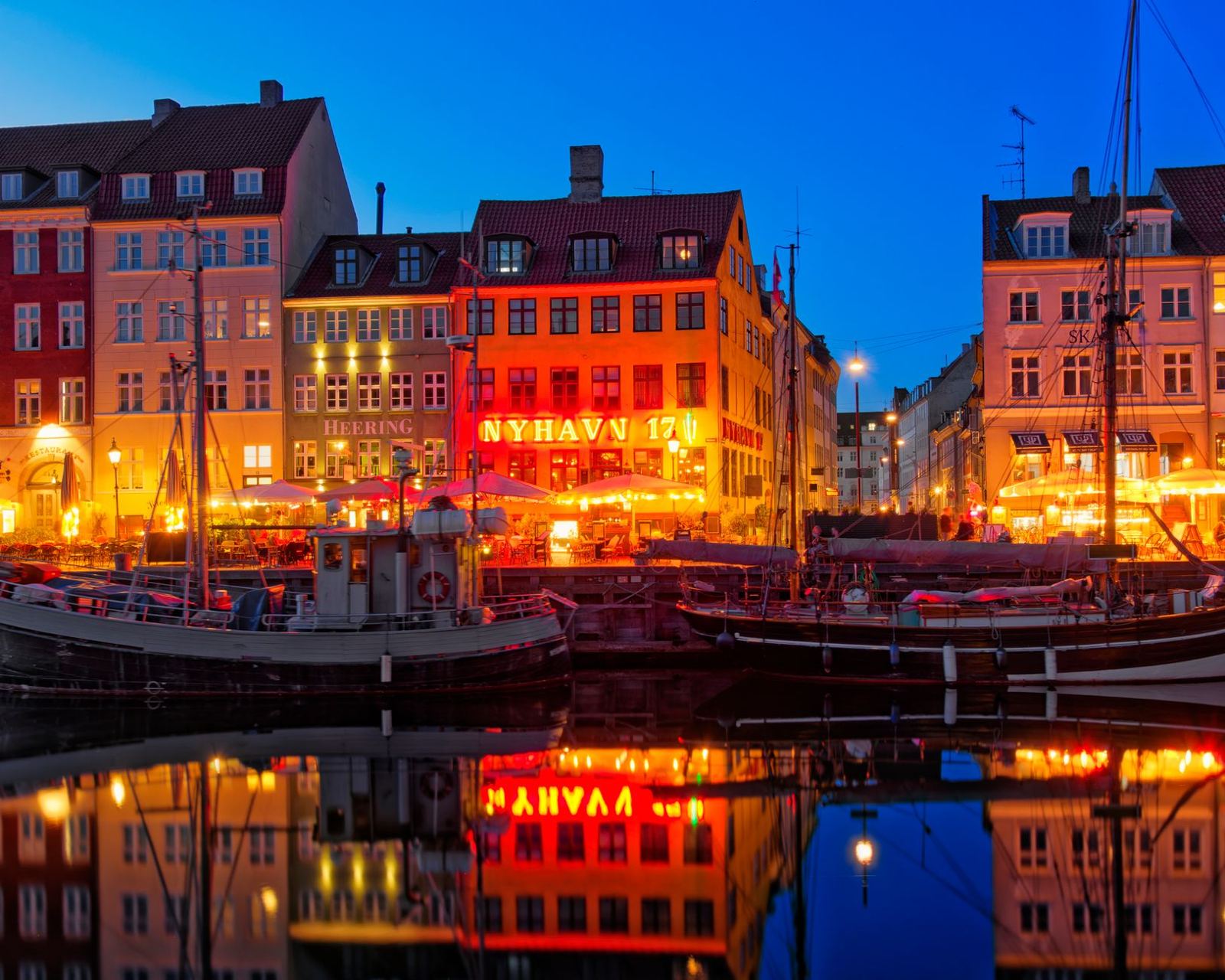
Nyhavn's coloured façades are the postcard itself — take the photo, then board a canal boat and see the city from the water (Netto-Bådene is the budget option). The Little Mermaid is the classic disappointment; it earns its visit only combined with the star-shaped Kastellet fortress en route.
Tivoli Gardens is one of the world's oldest amusement parks and is loveliest in the evening lights. For design lovers, Designmuseum Danmark; for art, the Louisiana Museum of Modern Art outside town — with its sculpture garden over the sea — is Denmark's finest museum, 40 minutes by train.
The Christianshavn canals and the alternative enclave of Christiania run by their own rules (respect the photography code). The view from the spiral ramp of the Rundetaarn, evenings in Vesterbro's Kødbyen (Meatpacking District) and the design of Superkilen park show three different faces of modern Copenhagen. In swimming season, join the locals at the Islands Brygge harbour baths.
Food & Drink
Copenhagen became one of world gastronomy's capitals through the 'new Nordic' revolution. Even if Noma-level budgets are out of reach, that kitchen's students have spread across the city — tasting menus run half the price of Paris.
The everyday classic is smørrebrød: meticulously built open sandwiches on rye; it's a lunch affair, best at the traditional addresses. The pølse (hot dog cart) street tradition lives on. Torvehallerne market works for both shopping and lunch; Reffen (in summer) is a street food village on the harbour. Bakery culture is taken seriously — for kanelsnegle (cinnamon buns) and cardamom rolls, the bakery with a morning queue is the right bakery. Beyond Carlsberg lies a rich craft beer scene.
Practical Tips
Renting a bike is the best way to live the city like a local — but follow the rules: hand signals, lane discipline, and a rear light is mandatory at night. Never step into a bike lane on foot.
The currency is the Danish krone (DKK); cash has all but vanished — everything takes cards. The driverless metro runs around the clock; the airport is 15 minutes from the centre. The Copenhagen Card pays off on museum-and-transport-heavy itineraries — do the maths. Service is included in restaurants; tipping expectations are low. Putting the Louisiana museum on a Sunday and stopping at the coastal towns on the way back is a classic, well-judged combination.