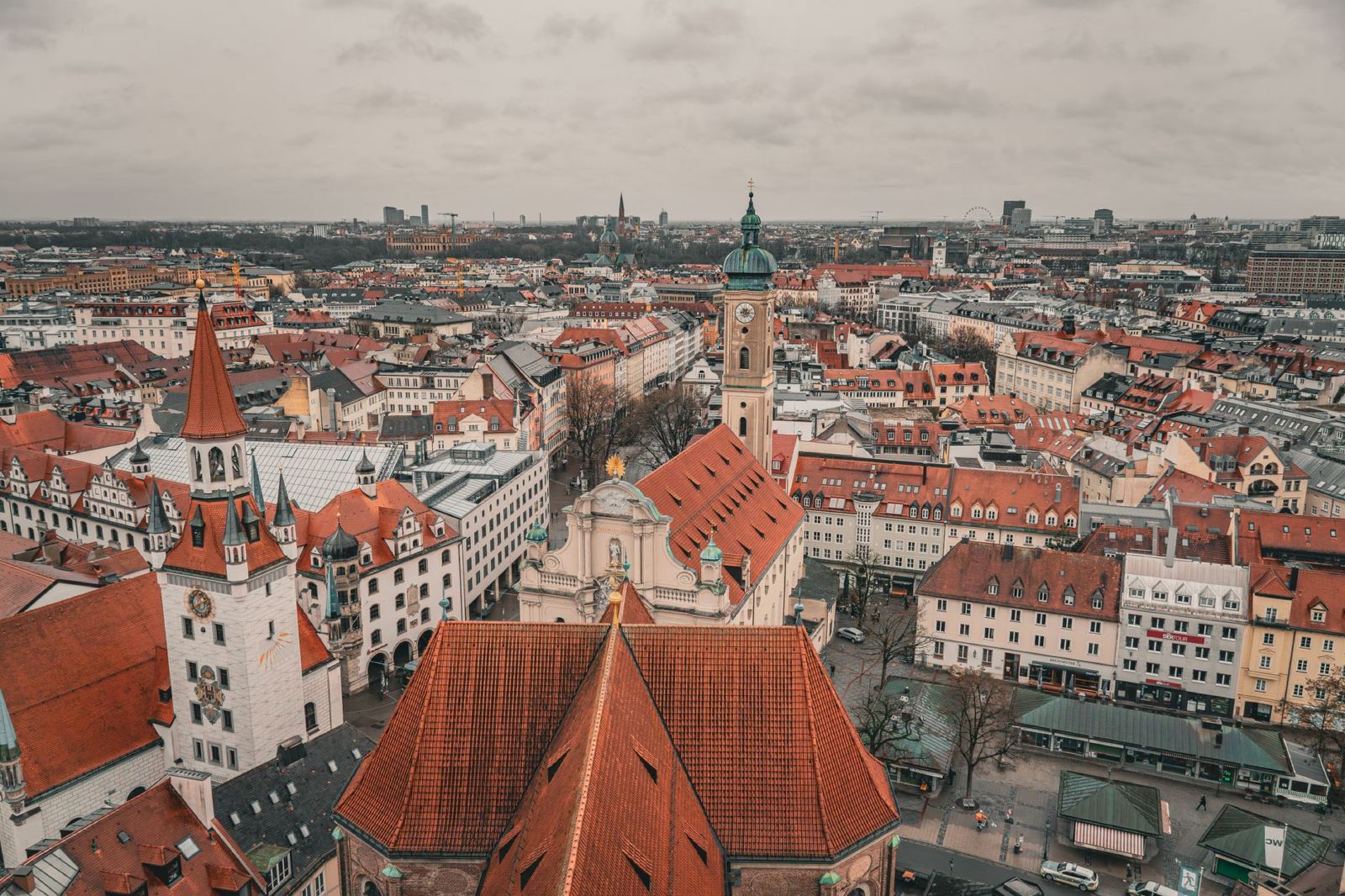
Munich is Berlin's exact opposite: wealthy, orderly, proud of its traditions. But don't let the 'conservative' label mislead you — this is also the city with Germany's highest quality of life, several of its best museums, and a river with a standing surf wave in the middle of town.
The city's essence isn't found at Marienplatz but in a beer garden: an evening under chestnut trees at long tables, never knowing who'll sit beside you. Bavarian culture isn't folklore — it's living daily life. They really do wear Lederhosen to weddings.
When to Go
May–September is beer garden season and the city at its best. Oktoberfest (mid-September to early October) is a phenomenon in itself — the world's biggest folk festival — but hotel prices triple for those two weeks; if you're not coming for it, shift your dates. The Marienplatz Christmas market in December is atmospheric. Winter makes Munich the ideal base for escaping to Alpine ski resorts.
What to See & Do
See Marienplatz and the Glockenspiel, but budget your real time for the Englischer Garten: in this park bigger than Central Park, watch the surfers on the Eisbach wave and break at the Chinese Tower beer garden. The Viktualienmarkt, the city's 150-year-old open-air market, is the best lunch stop in town.
Take the museum programme seriously: the Alte Pinakothek (old masters), the Pinakothek der Moderne, and for technology lovers the Deutsches Museum, the world's largest science museum. On Sundays many state museums cost 1 euro.
Nymphenburg Palace and its gardens want half a day. BMW Welt and its museum surprise even non-car people. Setting aside half a day for the Dachau Concentration Camp Memorial is a heavy but necessary act of facing history. Day trips are Munich's trump card: Neuschwanstein Castle, Salzburg or the Zugspitze in the Alps — all within two hours.
Food & Drink
Bavarian food is hearty: Weisswurst (white sausage — traditionally eaten before noon with sweet mustard), Schweinshaxe (crispy pork knuckle), Brezn (pretzels) and Obatzda (beer-cheese spread). Portions are serious; sharing is not frowned upon.
Beer garden etiquette is simple: don't sit at tables marked 'Stammtisch'; everything else is open to all — and in most gardens you may bring your own food as long as you buy the drinks. The Hofbräuhaus is touristy but worth one look; locals prefer Augustiner-Keller or Hirschgarten. For coffee-and-cake culture, the fresh schmalznudel at Café Frischhut is the classic.
Practical Tips
The S-Bahn (S1/S8) takes about 40 minutes from the airport to the centre. City transport works on a zone system; most sightseeing stays within zone M — buy a day ticket and validate it.
Shops close on Sundays; do your supermarket run on Saturday. Bike lanes are part of the pavement — don't walk in them. Book Neuschwanstein tickets online in advance; they sell out at the gate most days. Cash remains the only accepted payment in many beer gardens. The city is safe and clean; the greatest 'danger' is underestimating the power of a one-litre maß of beer.