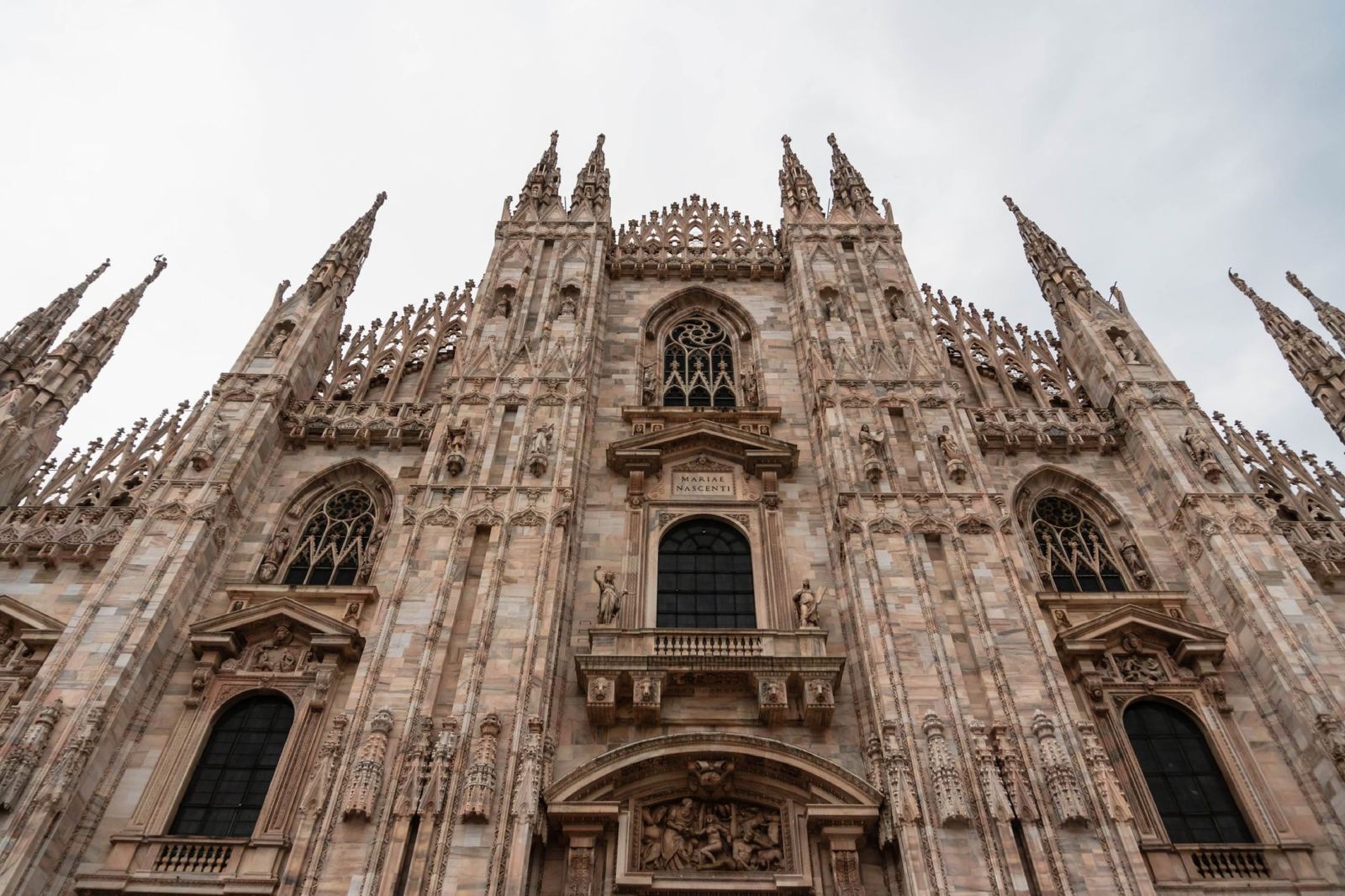
They call Milan 'Italy's least Italian city' — unfairly. True, there are no Roman ruins or Florentine frescoes here; instead there is what makes Italy's present: fashion, design, finance and the industrious elegance of the north. Milan doesn't show off; it opens its doors to those who know.
The city's character lives in its courtyards: behind ordinary-looking street doors hide Renaissance courtyards, secret gardens and design galleries. Loving Milan takes a little effort — but the reward is joining a living city rather than a tourist crowd.
When to Go
April–June and September–October are the balanced windows. The Salone del Mobile (design week) in April turns the city into the world's creative centre — but hotels become impossible; the same goes for fashion weeks (February/September). In August the Milanese abandon the city; many restaurants close but museums grow calm. Winter is foggy and cold — think of it as risotto season.
What to See & Do
Go up to the Duomo's roof — by lift or stairs; walking among the marble spires impresses more than the cathedral's interior. Pass through the Galleria Vittorio Emanuele II to Teatro alla Scala; the museum lets you peek into the auditorium.
Tickets for Leonardo's Last Supper sell out weeks ahead — buy the moment the calendar opens, or check mornings for cancellations. For art, the Pinacoteca di Brera (Caravaggio, Raphael); for modern design, the Triennale.
The streets of Brera are the classic pre-aperitivo walk. The Navigli canals — Leonardo's engineering legacy — come alive in the late afternoon; the canalside bars are the heart of aperitivo. Fondazione Prada and Pirelli HangarBicocca are two powerful contemporary art venues (the latter free). When tired, breathe in Sempione Park behind the Sforza Castle. Lake Como is an hour away — give it one sunny day.
Food & Drink
Milanese cooking is the wealth of the north: risotto alla milanese (with saffron), cotoletta (breaded veal chop) and ossobuco. Panettone was invented here and isn't limited to Christmas — good pastry shops carry it year-round.
Aperitivo was born in Milan and is still at its best here: a cocktail between 6 and 9 p.m. (the Negroni Sbagliato is a Milanese invention) with generous snacks. Navigli and Brera are the classics; the Isola district is the new generation's address. Lunch menus are practical and high-quality, matching the pace of a finance city. The panzerotti at Luini are the most famous quick bite near the Duomo.
Practical Tips
There are three airports: Malpensa is far (50 minutes by express train), Linate is closest to town, Bergamo is the low-cost hub — check which one your ticket actually uses.
The metro is fast and extensive; contactless cards tap straight in. Don't stop for the pigeon-feed and bracelet hustlers around the Duomo. Booking ahead for the Last Supper and the Duomo roof are Milan's two golden rules. Shops open on Sundays (unlike much of Italy). Elegance is the daily uniform here — trainers are fine, but sloppiness gets noticed.


