The biggest mistake first-time visitors make is assuming London consists of Big Ben, Buckingham Palace and red buses. Those are London's postcard. The city itself begins behind the postcard.
London is not really one city. Westminster is the stage of state and crown. The City of London belongs to money, trade and the old guilds. The East End carries the story of migrants, dockworkers and neighbourhoods that keep being reborn. Greenwich is the memory of an empire that opened to the sea. And Notting Hill, Brixton, Camden, Soho, Hampstead and Shoreditch — though they sit on the same tube map — are separate worlds that resemble each other not at all.
When I introduce London to a group, I start not with the buildings but with power. Because the visible subject is palaces, towers and parliament; the real subject is this question: how did a small island country come to rule half the world — and how did that whole world then come and settle in London's neighbourhoods?
That is why touring London with only a 'sights' list means seeing much and understanding little. Read the city through its river, its markets, its free museums and its neighbourhoods. Walk among Westminster's stern stone façades one morning; that same evening, in Soho, Chinatown or Brick Lane, feel as if you've crossed to another corner of the planet. That is London's real power: it never shows you a single England.
When to Go
Ask me, and London's most balanced windows are May-June and September-October. The days are long, the parks are alive, and summer's heaviest crowds haven't yet settled on the city. Even so, never build a plan that trusts London weather. Sun in the morning, rain at noon, wind in the evening — all possible. A light rain jacket beats an umbrella; the wind usually turns umbrellas into decoration.
July and August mean long days, outdoor events and park season. In exchange, hotels are expensive, the centre is crowded, and the major ticketed sites grow longer queues. If summer is your window, put the Tower of London, Westminster Abbey and St Paul's into the first hours of the morning.
December, with Oxford Street, Regent Street, Covent Garden and the great store windows, is the city's most theatrical stretch. London plays Christmas well; prices rise to match. January and February are darker and cooler but usually cheaper. For a museum-centred programme, winter is no bad idea. One of London's greatest advantages, after all, is that most of its world-class museums — the ones you flee into when the rain starts — are free.
What to See & Do
How to Read London
Divide the city into five main parts:
1. Westminster and royal London: Parliament, Big Ben, Westminster Abbey, Buckingham Palace, St James's Park and Whitehall.
2. The City of London: St Paul's, Bank, the old guilds, the skyscrapers, and the historic trading centre reshaped by the Great Fire.
3. The Tower and the Thames line: the Tower of London, Tower Bridge, Borough Market, the South Bank and Tate Modern.
4. Museums and West London: the British Museum, the National Gallery, the Natural History Museum, the V&A, Kensington and Notting Hill.
5. Greenwich and Docklands: the Cutty Sark, the Royal Observatory, the prime meridian, the Maritime Museum, Canary Wharf and the transformation of the old docks.
Trying to compress all of this into two days is not a trip; it is a logistics operation. Seeing London for the first time, give it at least four full days. Three is enough only if you choose ruthlessly. With a fifth day, you stop rushing Greenwich — or add a day trip like Windsor or Oxford.
Westminster: The Stage of the State
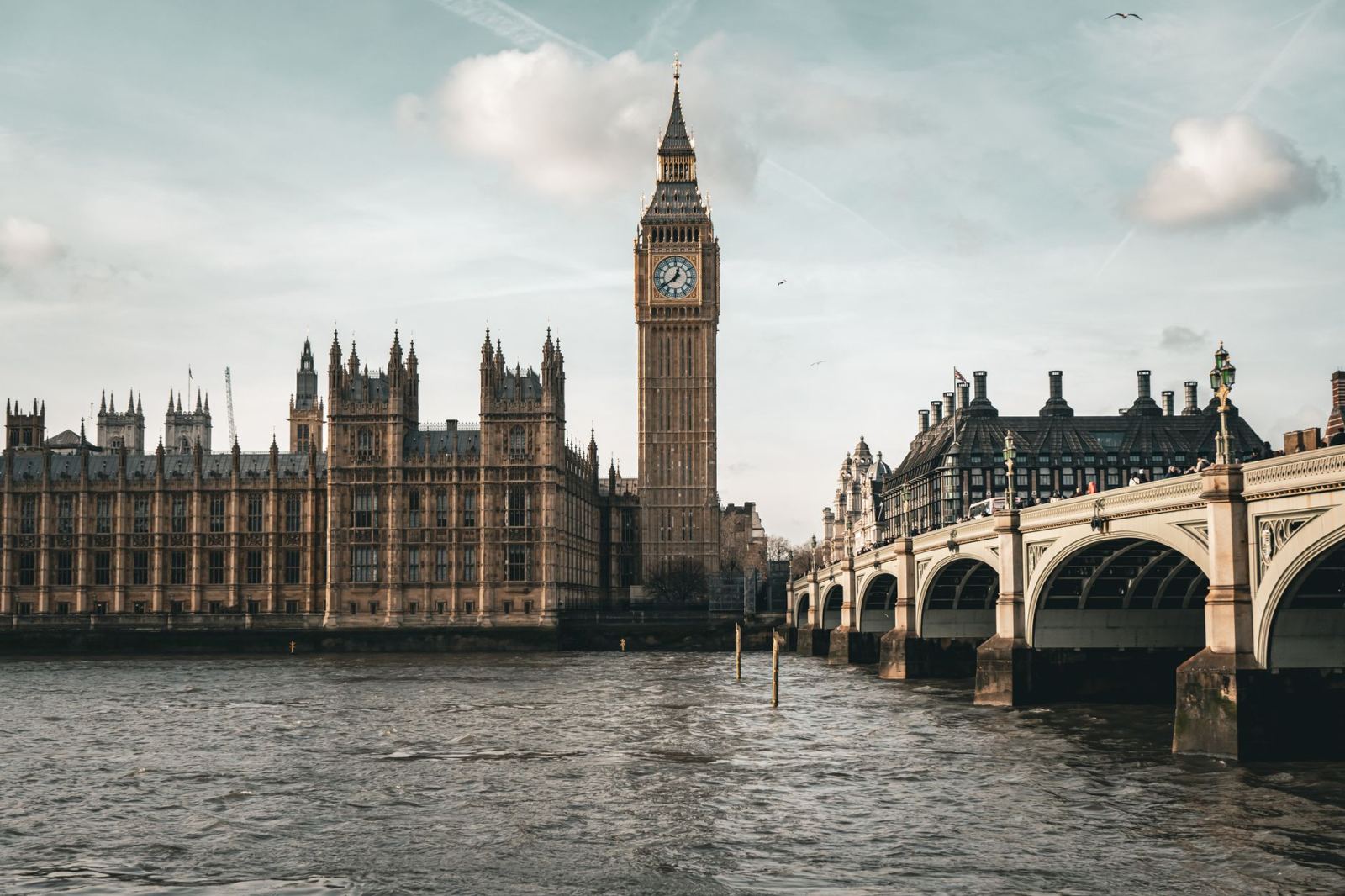
London's classic image begins here. The Houses of Parliament on the Thames, the Elizabeth Tower and the Big Ben bell inside it, Westminster Abbey and the Whitehall line look like separate buildings; in truth they are a single great stage of the British state tradition.
Tell a group that Big Ben is the name not of the tower but of the great bell inside it, and everyone pauses for a moment. The tower's official name is Elizabeth Tower. But some names live on as the people gave them; Big Ben is one of those.
Seeing Westminster Abbey only from the outside is a great loss. This is not merely a church; it is a national memory in stone, where kings are crowned and statesmen, scientists and artists are buried side by side. Newton, Darwin, monarchs and poets stand under the same roof. If you want to see how England tells its own story, walk in.
Leaving the Abbey, walk to Buckingham Palace via Parliament Square, Whitehall, Horse Guards and St James's Park. If the Changing of the Guard matters to you, don't just show up by the clock; check the ceremony calendar in advance. Let me be frank: skipping the ceremony and walking St James's Park instead of standing an hour behind a barrier is sometimes the better London experience.
The Tower of London: Fear Before the Crown
Those who tour the Tower of London only for the Crown Jewels miss half the building. Palace, fortress, prison, execution ground, mint and the state's machine of fear — its history runs close to a thousand years.
The White Tower, built by William the Conqueror, was the Normans' way of telling the city 'we are here now'. Later, the stories of names like Anne Boleyn, the tales of Traitors' Gate and the Bloody Tower turned the building into one of English history's most dramatic stages.
My way: when the gates open, go straight to the Crown Jewels and finish that section before the crowd swells. Then join the free Yeoman Warder — Beefeater — tour. Because seeing the Tower's stones is one thing; hearing why those stones were feared is another.
Tower Bridge: Cross It or Go Inside?
Many confuse Tower Bridge with London Bridge. The twin-towered bridge that opens in the photographs is Tower Bridge. London Bridge is the plainer one a few hundred metres upstream.
Tower Bridge from the outside is already enough on its own. But if engineering interests you, the high walkways, the glass floor and the Victorian engine rooms earn the visit. If you'd climb purely for the view, London has plenty of free alternatives; if you're curious how the bridge works, the ticket makes sense.
St Paul's Cathedral: The Dome Born of Fire
The Great Fire of 1666 destroyed the old St Paul's. Today's cathedral, designed by Christopher Wren, became the symbol of the new London rising from the ashes. The dome seen from the south bank — above all from the Millennium Bridge — remains one of the city's strongest frames.
If you go in, don't stay on the main floor. The crypt and the Dome Galleries are covered by the ticket. The stairs are not easy for everyone; but if you can climb, you see the dome's inner structure and the city from an entirely different angle.
The British Museum: The Price of Fitting the World into One Building
The British Museum is free; being free does not mean it can be toured quickly. The classic mistake here is trying to finish every hall. Choose two or three sections. The Rosetta Stone, the Egyptian galleries, the Assyrian reliefs and the Parthenon marbles are the natural stops of a first visit.
But touring this museum only for 'how much there is' falls short. The real question is: how did these objects get here? To understand London's imperial history, the story of the collection's arrival matters as much as the collection itself.
The National Gallery and Trafalgar Square
The National Gallery is free as well. Its spot on Trafalgar Square slots it easily into the Westminster-West End route. The same rule applies here: don't try to consume the whole museum. Choose a few painters or a period; leave the rest for the next visit.
The South Bank: One of London's Finest Free Walks
Start at Westminster Bridge and walk east along the river's south bank. The London Eye, the Southbank Centre, the National Theatre, Tate Modern, Shakespeare's Globe, the Millennium Bridge and Borough Market arrive on a single line. The city keeps changing its face for you here: Parliament across the water, then the dome of St Paul's, further on the towers of the City and Tower Bridge.
This is one of the things I recommend most to first-time visitors. Because without buying a single ticket, you see the city's layers of history, architecture, river and daily life in one walk.
Enter Borough Market at lunchtime and be ready for the human tide. It's good for eating, but don't inflate the 'local market' romance; this is now a major tourist stop as well. Early morning or weekdays are calmer.
Greenwich: More Than the Zero Point of Time
Greenwich is not just the place where you stand with a foot in each hemisphere for a photograph. It is the summary of England's naval power, its obsession with scientific measurement, and the port culture that opened onto empire.
The Cutty Sark is the emblem of the fast tea-trade era. The National Maritime Museum tells the naval story. And the Royal Observatory on the hill of Greenwich Park is not merely 'the zero point' — it is the story of how measuring time became a matter of life and death for sailors solving the longitude problem.
Don't go to Greenwich and back by tube. Do at least one leg by Thames boat. Boarding at Westminster or Tower Pier, you watch London grow along its river: old warehouses, the Tower, Docklands, Canary Wharf. The journey itself is like a guided city tour.
Canary Wharf and the Old Docks
The district now filled with the glass towers of Canary Wharf was once one of the busiest port systems in the world. Sugar, rum and other colonial goods arrived at the West India Docks. When container shipping and larger vessels made the old docks obsolete, the area collapsed; then it was rebuilt as a financial centre.
To understand London's transformation, Canary Wharf's glass towers matter as much as Westminster's historic stones. Because this city doesn't only preserve its past; where the past loses its economic function, it rewrites the place without mercy.
A note for route-combiners: our Paris guide covers the neighbour 2.5 hours away by Eurostar; for those extending the British route north, our Scotland guide takes over; and for comparing two imperial capitals, our Istanbul guide stands ready.
Food & Drink
Mocking English food is easy; eating badly in London, however, is now your own fault. Migration has turned the city into one of the most varied food maps on earth.
Let's start with the classics. In a good pub, the Sunday roast comes with gravy, Yorkshire pudding and roast vegetables. For fish and chips, don't sit down at the first sign on a tourist square; choose the places where the fish is fried fresh and the takeaway line moves fast. Pie and mash shows the plainer side of old working-class London. And the full English breakfast is not light enough to eat every morning; try it once, then walk it off.
For Indian food, don't fixate on Brick Lane alone. Brick Lane is historic and fun, but good Indian, Pakistani and Bangladeshi cooking has spread across many of the city's neighbourhoods. Chinatown is practical for fast, varied eating. In Soho the world's kitchens sit shoulder to shoulder. Around Green Lanes, Turkish food is strong; useful on the day you miss home cooking — though going to London and eating kebab every night is unfair to the city.
Borough Market, Maltby Street Market and Camden Market provide abundance. But know from the start that market food is not always cheap. London's budget-saving formula is lunch menus, bakeries and the supermarket 'meal deal'.
Afternoon tea is a lovely ritual, but not every expensive hotel returns the same value. On a limited budget, choose a good tearoom rather than paying a fortune for a grand salon. The real point is not the three-tier stand; it is spending an afternoon without hurrying.
Practical Tips
For most visitors, the easiest way to pay for London transport is a contactless bank card or a phone. On the tube and trains, tap the same card or the same device in and out. Enter with your phone and exit with the physical card, and the system may treat you as two different passengers and overcharge you.
Coming in from Heathrow, the Elizabeth line balances speed and price well enough for most visitors. The ride to Paddington takes about half an hour, and the line continues to centres like Bond Street, Tottenham Court Road, Farringdon and Liverpool Street. The Heathrow Express can be faster, but for most tourists the minutes gained are limited for the price difference.
On escalators, stand on the right and walk on the left. This small rule is not small to Londoners. Crossing the road, remember traffic comes from the left; the 'Look Right' and 'Look Left' painted on the ground are not decoration.
London is a walkable city, but map distances can mislead. Sometimes descending into the tube takes longer than walking. At close pairs like Covent Garden-Leicester Square, Charing Cross-Embankment or Mansion House-Cannon Street, walking usually wins.
Sockets are the British type G; bring an adapter. The city runs largely on cards — no need to carry heavy cash. Watch phones and wallets at crowded tube stations and tourist areas. London is on the whole an easy city to travel, but don't leave your big-city reflexes at home.
Turkish citizens need a visa for tourist visits to the United Kingdom. Since fees and conditions can change, rely only on the official checker and the Standard Visitor page on GOV.UK; never plan travel documents from social media comments.
Suggested Itinerary
Day 1 — Westminster, Royalty and the West End
Start the morning at Westminster Abbey. Then walk via Parliament Square, Big Ben, Whitehall and Horse Guards to St James's Park. After Buckingham Palace, continue down The Mall to Trafalgar Square. In the afternoon, tour a few chosen rooms of the National Gallery. In the evening, walk the Covent Garden-Soho-Chinatown-Piccadilly Circus line. If the budget allows, end the day with a West End play or musical.
Day 2 — The Tower, the City and the South Bank
Enter the Tower of London at opening; the Crown Jewels first, then the Yeoman Warder tour. See Tower Bridge from outside — go in if the engineering tempts you. Take lunch around Borough Market. Call at Tate Modern, then cross the Millennium Bridge to St Paul's. If you're entering the cathedral, check the last-entry time in advance. Stay by the Thames or on the South Bank for the evening.
Day 3 — Museums and Neighbourhoods
Give the British Museum two or three hours in the morning. In the afternoon, choose one of two directions: the Natural History Museum + the V&A in South Kensington, or Notting Hill + Portobello Road + Kensington Gardens. In the evening pick only one of Camden, Shoreditch or Hampstead. Don't compress all three into one night.
Day 4 — Greenwich and Docklands
Take the Thames boat to Greenwich in the morning. Walk the Cutty Sark, the Old Royal Naval College, the National Maritime Museum and Greenwich Park. Climb the hill for the Royal Observatory and the prime meridian. On the way back, ride the DLR to Canary Wharf and see the old docks reborn as a financial centre. Return to the centre on the Jubilee line.
If You Have a Fifth Day
Within the city: Hampstead Heath, Kew Gardens, Richmond or a deeper East End day. Beyond it, Windsor is the easiest royal escape. Oxford serves academic history, Bath the Roman and Georgian heritage, Stonehenge prehistoric England. There are tours that attempt Oxford + Bath + Stonehenge in one day; they show many places and leave time for none. My way: for one day, choose one main destination only.
Frequently Asked Questions
How many days are enough for London?
Four full days is the ideal floor for a first visit. Three days covers the classic centre, but demands sacrificing Greenwich and the neighbourhoods. Five or six days lets you tour the museums without hurry and add a day trip.
Do I need an Oyster Card in London?
For most adult visitors, no. A contactless bank card or a phone works in the same pay-as-you-go system with the daily cap. Just remember each passenger must use a separate card or device. If your foreign card charges transaction fees, an Oyster may make better sense.
Are London's museums really free?
The permanent collections of the great national museums — the British Museum, the National Gallery — are free. Some special exhibitions charge, and even for free entry a timed reservation may be recommended.
Is the Tower of London worth the ticket?
If English history, monarchy and dramatic stories draw you, absolutely. If you only want to see a castle from outside, it may feel expensive. Give it at least three hours and join the free Yeoman Warder tour.
Is the London Eye a must?
No. The view is fine, but tickets are dynamically priced and the queue can run long. For the skyline there are free pre-booked options like the Sky Garden, or open spaces like Hampstead Heath. The London Eye is loved most by families with children and by those wanting a first panoramic ride.
Is Greenwich worth the trip?
Yes — above all if you have four or more days in London. It is not just the meridian photograph. Naval history, the park, the observatory, the Cutty Sark and the Thames boat ride together form a meaningful full-day programme.
Where should I stay in London?
For a first, short visit: Westminster, Victoria, the South Bank, Covent Garden and Bloomsbury are practical for transport but expensive. For better prices consider Paddington, Earl's Court, Hammersmith, King's Cross or well-connected areas within Zone 2. When choosing a hotel, judge not by kilometres but by the walk to the station and the line's ease of connection.
Is London very expensive?
Yes — merciless if you travel without a plan. But the free museums, the parks, the Thames walks and the daily transport cap balance the cost. What ruins the budget most: the hotel, last-minute tickets to the major sites, and eating every meal in the tourist centre.
Do Turkish citizens need a visa for London?
Yes — Türkiye is on the United Kingdom's visa-required list. Tourist trips generally require the Standard Visitor visa. Since rules and fees can change, use the official checker on GOV.UK before applying.