Ireland is a small island holding something large: cliffs dropping sheer into the Atlantic, forty shades of green, five-thousand-year-old burial mounds and one of the world's great talking peoples. Here 'craic' (fun, good company) is not a word but a unit of living — and the pub is where it's best measured.
Dublin is the gateway, but Ireland's essence lies west: the coastal villages of the Wild Atlantic Way, the musical streets of Galway, the scenic loops of the Kerry and Dingle peninsulas. Rent a car, keep the plan loose and trust the roadside stops — in Ireland the best moments aren't planned but happened upon.
When to Go
May–September is prime: long days (light until 10 p.m. in June), 15–20°C and the festival calendar. The weather is fickle in every season — 'four seasons in one day' applies here too; the rain jacket stays in the suitcase all year. St. Patrick's week in March is exuberant but crowded. October–April is calm and cheap; despite short days, winter evenings by a pub fire have a pleasure all their own.
What to See & Do
Two days cover Dublin: the Book of Kells and the magnificent Long Room library at Trinity College, the cobbled lanes of Temple Bar (touristy but worth a look), the rooftop bar of the Guinness Storehouse and the harrowing independence story of Kilmainham Gaol. Grafton Street's buskers are the city's soundtrack.
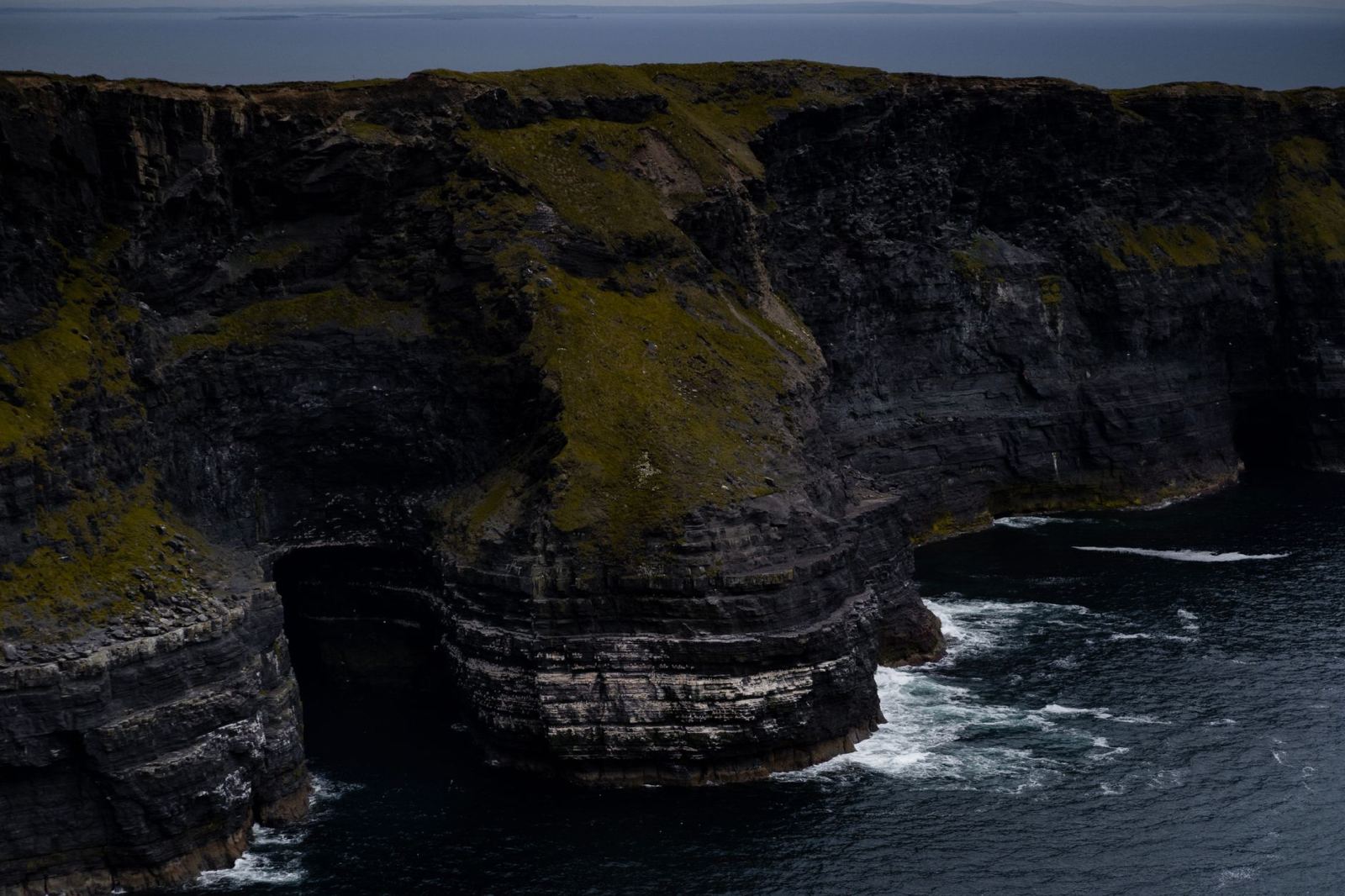
Then head west: the Cliffs of Moher (214 m, best in afternoon light; approach on foot from Doolin to dodge the crowds), followed by the moonscape limestone of the Burren. Galway, with its street music and painted façades, is the island's most likeable city — one evening in the Latin Quarter is plenty and never enough.
The Ring of Kerry is the classic, but its neighbour the Dingle Peninsula is more intimate: the Slea Head drive, island views and the town's musical pubs. To the north, Connemara's bog-and-mountain scenery and Kylemore Abbey; to the south, Cork's English Market with the nearby towns of Cobh and Kinsale enrich the route. The history chapter: Newgrange (a passage tomb older than Stonehenge, ticketed and guided) and the monastic ruins in the lake valley of Glendalough. If Northern Ireland joins the plan, the Giant's Causeway and Belfast ask for two more days.
Food & Drink
Irish food has undergone a quiet revolution over twenty years: the island holds Europe's finest dairy, beef and seafood, and a new generation of chefs discovered it. The classics stand firm: Irish stew, soda bread, boxty (potato pancakes) and the fully-armed Irish breakfast.
The sea chapter is strong: Galway oysters (peaking at the September festival), Dingle crab, smoked salmon and the 'chipper' fish-and-chips culture. Black pudding at breakfast causes hesitation but demands a try. Don't underestimate pub food — the seafood chowder and soda bread pairing is the lunchtime standard. The claim that Guinness truly tastes better in Dublin deserves testing; craft beer and Irish whiskey (with its tours and tastings) complete the drinks chapter. Instead of hot chocolate, the Irish coffee is the invention of rainy afternoons — invented here, after all.
Practical Tips
A rental car is nearly essential (public transport thins on the west coast) and traffic runs on the left; the narrow stone-walled lanes frighten on day one and feel normal by day two — full insurance is peace of mind. Inside Dublin a car is pointless.
The two-country reality: the Republic uses the euro, Northern Ireland the pound; the border is invisible, but confirm your rental's permission to cross north. Pub etiquette: order at the bar, buying rounds is the social rule, and no loud talk during the live music. Tipping is 10–12% in restaurants; not expected for a pint. Every plan needs a weather plan B; layers and waterproof shoes are standard on walks. At popular sites like Moher, booking parking online skips the queue. And the final rule: whoever you ask for directions will tell you a five-minute story — count it as part of the trip, not a delay.