Thailand is the gentlest of the doors into Southeast Asia: the tourism infrastructure is mature, transport easy, the kitchen generous and the people genuinely warm. To the first-time visitor and the tenth-time regular alike, the country keeps opening new layers with the same generosity.
The route logic has three parts: Bangkok's energy (in its own guide), the mountain-and-temple calm of the north (see our Chiang Mai guide) and the island universe of the south. This guide maps the country as a whole — and above all the island choice, because which sea and which island you pick sets the character of a Thai trip.
When to Go
November–February is the country's golden season: dry, sunny, 'cool'. For islands, the two seas run separate calendars: the Andaman coast (Phuket, Krabi, Phi Phi, Lanta) peaks November–April and churns in the May–October monsoon; the Gulf islands (Samui, Phangan, Tao) stay drier January–August and take their rain in October–November. So there is no 'wrong season' — only the right coast to choose. The Songkran water festival in April is the country's most fun week, in the middle of the heat.
What to See & Do
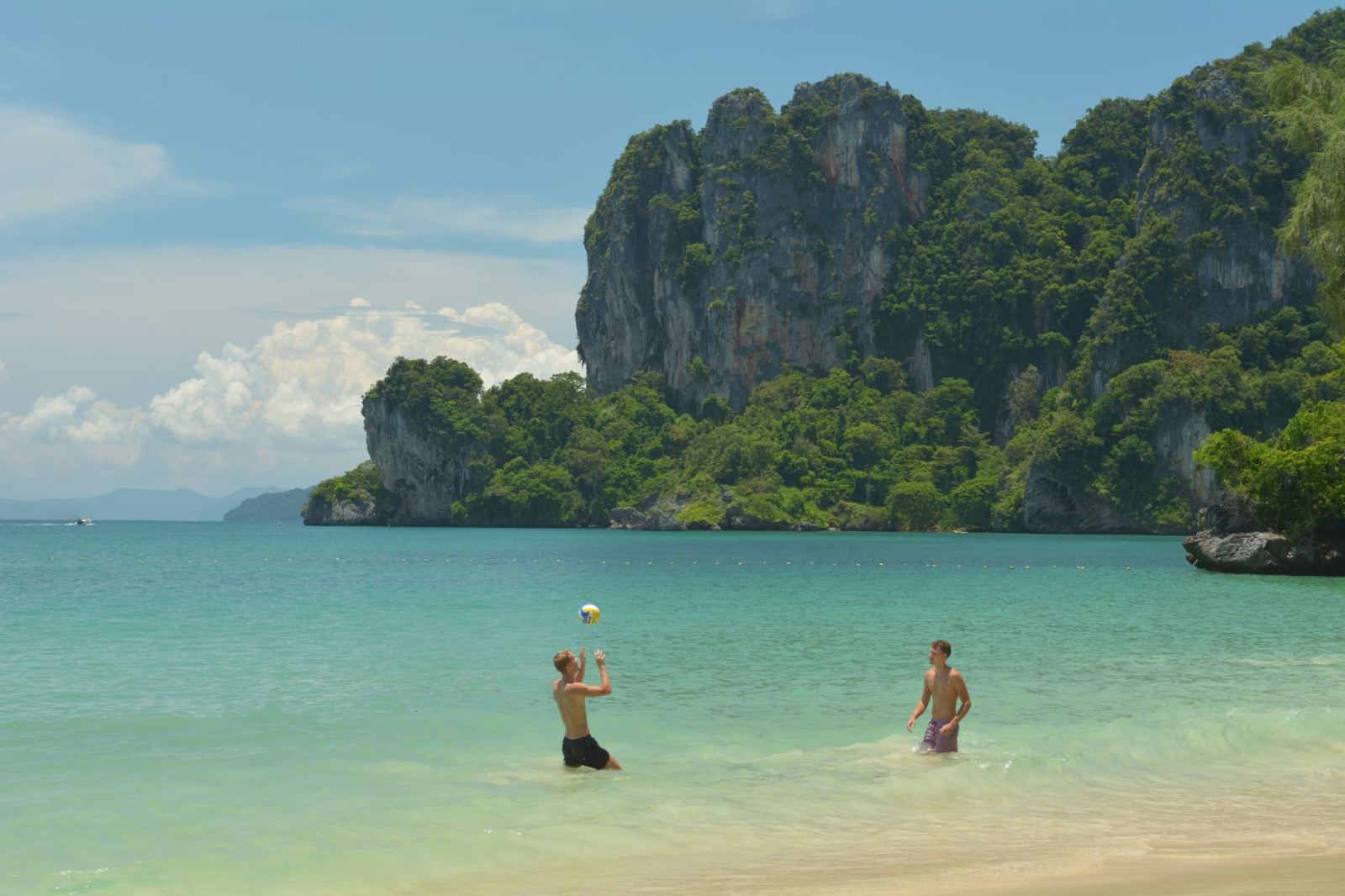
Choose your island by character: Krabi-Railay, with its limestone towers and climbing culture, is the scenery summit; Ko Lanta is calm, family-friendly and long-beached; Ko Tao is the world's cheapest dive-certification address; Ko Phangan hides yoga and quiet northern coves beyond the full moon party; Phuket offers the biggest and busiest of everything. Phi Phi and Maya Bay keep their beauty but brace for boat traffic — first tours of the morning are essential.
On the central plain, Ayutthaya (a day trip from Bangkok, by train) and calmer Sukhothai open their temple ruins to bicycles. Kanchanaburi's river and the Erawan waterfalls make the western escape. In the north, Chiang Rai's White Temple and the Pai valley extend the Chiang Mai route.
The classic two-week formula has proven itself: 3 days Bangkok + 3–4 days north + 6–7 days island. And the country's best 'sight' is an activity: drifting stall to stall through a night market, skewer in hand — Thailand's summary lives in that walk.
Food & Drink
Thai cuisine rests on four pillars of taste — hot, sour, sweet, salty — and every plate is a negotiation of that balance: pad thai, som tam, tom yum, green and massaman curry form the nationwide core curriculum. Regional signatures live in our separate guides (Bangkok's street universe, the north's khao soi); the south's contribution is the island barbecue and the Muslim-influenced roti-and-massaman culture.
The street rules never change nationwide: the queued stall is the fresh stall, the one-dish master is that dish's master, and 'phet nit noi' (a little spicy) saves lives. The fruit chapter is a journey of its own: mangosteen, rambutan, mango sticky rice in season and the courage-demanding durian. Cocktail buckets are a tourist invention; fresh coconuts and Chang or Singha beer are the local standard. A cooking class — the kind that begins with a market tour — teaches the kitchen's grammar in half a day.
Practical Tips
Domestic transport is easy and cheap: internal flights (AirAsia, Nok) solve the long hauls, night trains (Bangkok–Chiang Mai) are the nostalgic alternative, and the ferry-catamaran network for island hops is well oiled. Grab is the city standard; tuk-tuk bargaining is part of the experience.
Temple etiquette is uniform nationwide: shoulders and knees covered, shoes off, no posing with your back to a Buddha. The royal family is a taboo subject — jokes included. Scooter rental is the number-one source of both freedom and accidents: don't ride without the helmet-licence-insurance trio. Ask for life jackets on island boats. The common little games (the gem shop tour, the 'temple is closed' redirect, the jet-ski damage claim) are all escaped with a smile and a steady walk. ATMs charge a flat fee per withdrawal — take out large sums at once. And make sure your passport has six months' validity; visa-exemption terms vary by nationality, so check the current rules.