Marrakech greets you with a sensory ambush: mint tea and spices, moped horns, hammering from the workshops, sun striking the red ramparts. The first hours can overwhelm; then you crack the city's rhythm and the chaos becomes choreography.
The architectural secret here is inwardness: blank walls to the street, fountained courtyards with orange trees within. Staying in a medina riad isn't accommodation — it's the experience itself. Dive deep into the souks by day, retreat to the courtyard in the midday heat, and step onto the smoky stage of Jemaa el-Fna at night.
When to Go
March–May and October–November — hot but bearable days, cool evenings — are the ideal windows. In summer 40°C-plus is normal; compress plans into morning and evening and give midday to the pool or courtyard. Winter is sunny and mild but nights get surprisingly cold — most riads lack central heating, so ask. During Ramadan the rhythm shifts; some places close by day, and the city comes alive after iftar.
What to See & Do
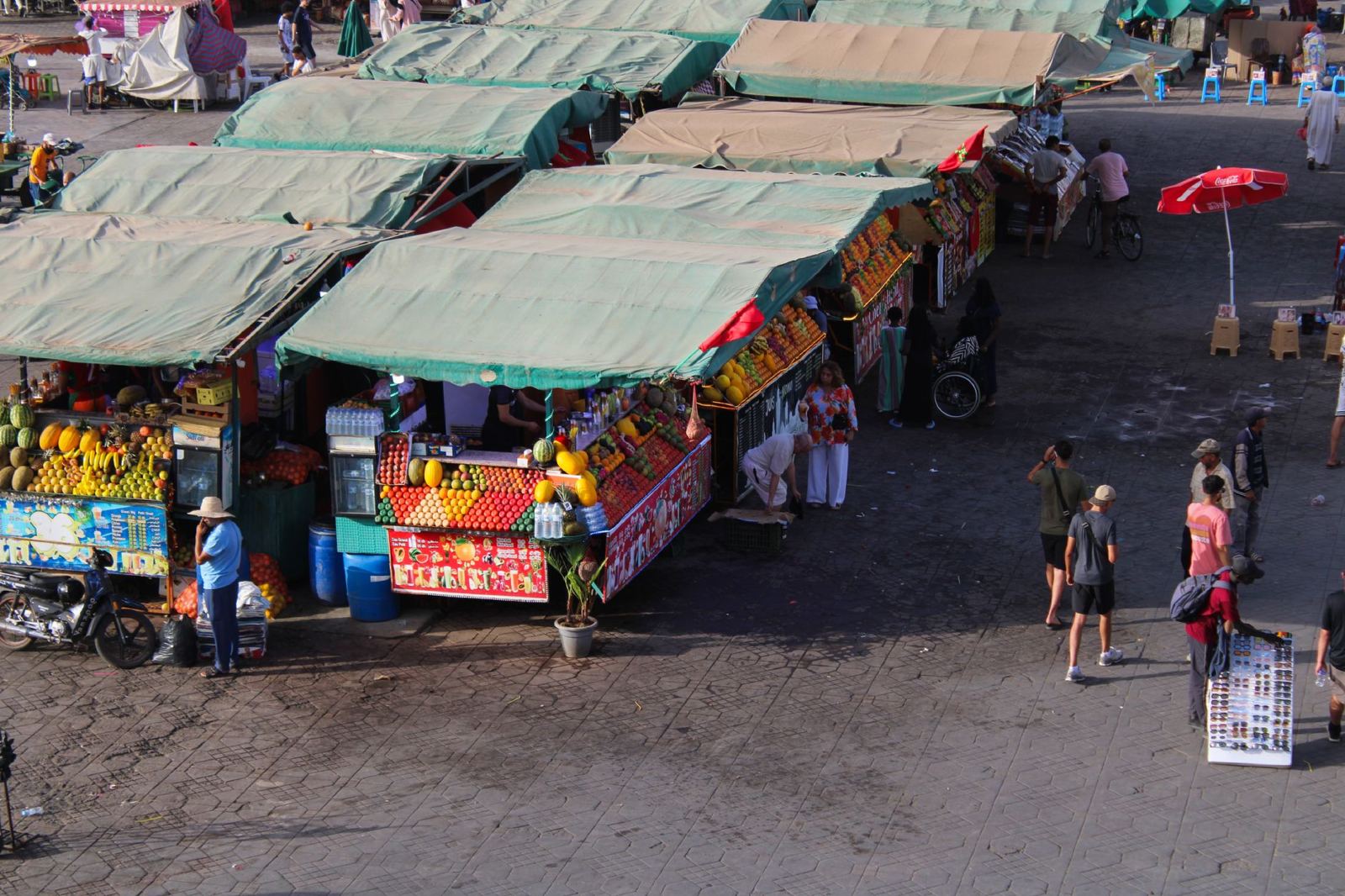
See Jemaa el-Fna twice a day: orange-juice presses and water sellers by day; food stalls, storytellers and musicians after sunset — an entirely different stage. One of the terrace cafés overlooking the square is the ideal box seat for the transformation.
Get lost in the souks without a plan — you will anyway; the metalworkers, dyers and leather workshops progress zone by zone. The tile and stucco work of the Ben Youssef Medersa is the souk's antidote in calm. The Bahia Palace and the Saadian Tombs are the two stops of palace art.
Book the first morning slot for the cobalt blue and cacti of the Jardin Majorelle; it pairs with the YSL Museum next door. Gueliz (the new town) offers a modern contrast of galleries and cafés. At sunset, the Atlas silhouette reflects in the pool of the Menara garden outside the walls. With time to spare: the Ourika valley in the Atlas foothills or the ocean breeze of Essaouira are both day-trip distance.
Food & Drink
Tajine and couscous are the core repertoire, but Marrakech's own dish is tangia: meat slow-cooked for hours in an urn buried in hammam ashes — ask at the eateries of the Mellah. On the street, msemen (layered flatbread) and harira soup are the breakfast and late-afternoon classics.
At the Jemaa el-Fna stalls the rule is simple: the busy stall is the fresh stall. Mint tea ('Moroccan whisky') is part of every bargain and every conversation — declare your sugar preference upfront. A home-cooked dinner at your riad beats most restaurants; a day's notice is all it takes. Cooking classes (market shopping included) teach the kitchen's logic in half a day.
Practical Tips
Bargaining is the rule of the game: start at a third of the first price, proceed with a smile, and never ask a price you don't intend to pursue. Volunteer guides announcing 'the road is closed, I'll take you' are the classic trap — a firm 'la, shukran' (no, thank you) suffices.
Google Maps loses its bearings in the medina; take your riad's card and learn the names of the main gates (babs). Covering shoulders and knees, especially in the medina, earns you easier respect. In taxis, insist on the meter or fix the price before boarding. The currency is the dirham (MAD); cash is still king, ATMs are widespread. Drink bottled water. Ask permission before photographing stallholders and especially the square's performers — the artists expect a tip, and it's a fair system.