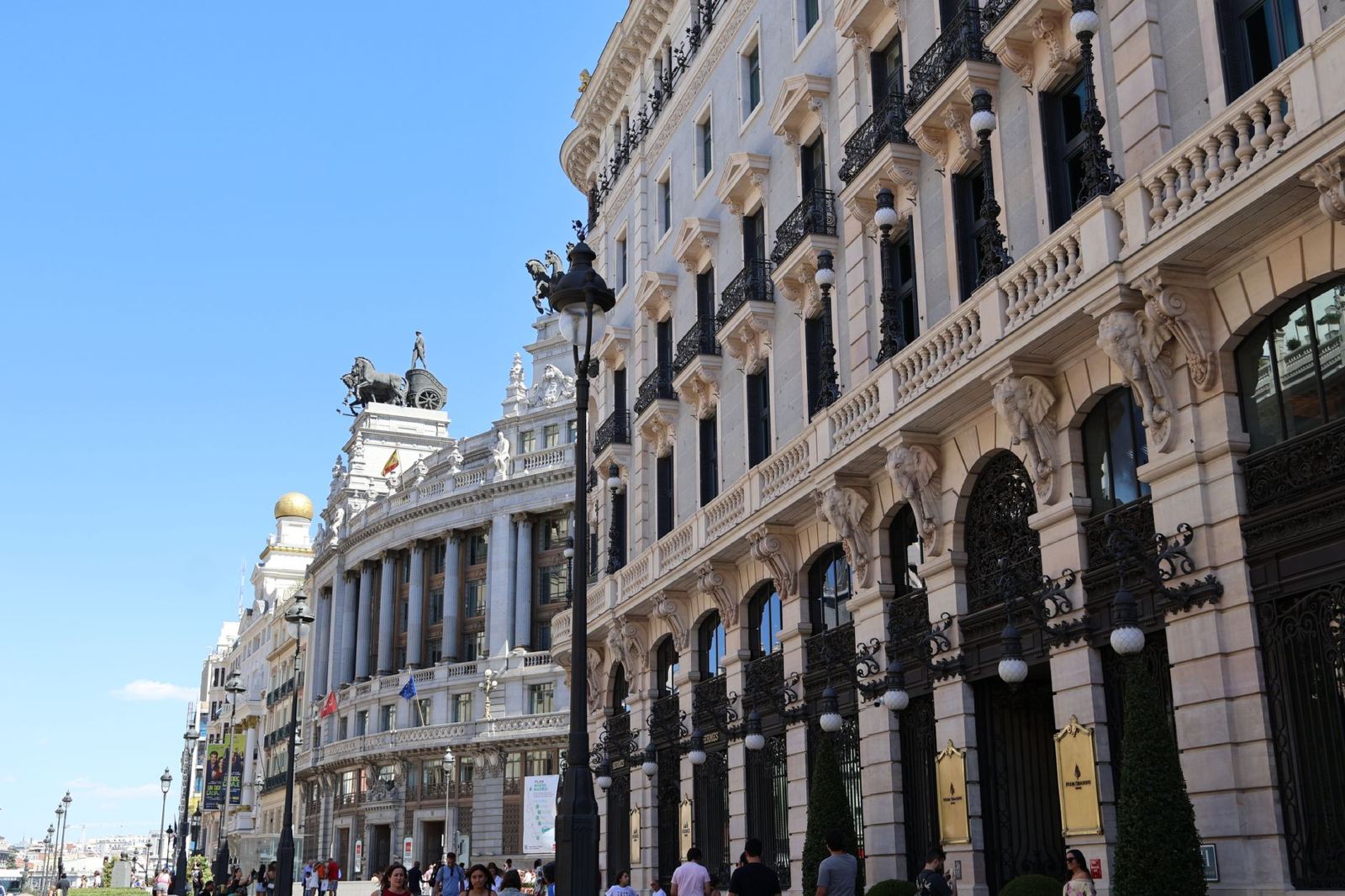
Madrid stopped living in Barcelona's shadow long ago. There's no seaside, but something else instead: Europe's densest concentration of art on a single boulevard (the Paseo del Arte), squares that begin to fill after midnight, and neighbourhoods that live for themselves rather than for tourists.
You have to accept the city's rhythm: lunch at 2:30 p.m., dinner never before 9:30, and nights that end near dawn. Adapting to Madrid means changing your clock, not your itinerary.
When to Go
April–June and September–October are ideal; Madrid sits on a high plateau, so summers are scorching (40°C happens) and winters surprisingly cold. In August the city half-empties — many local spots close for holidays. The San Isidro festival in May is the perfect excuse to see the city at its most local.
What to See & Do
The art triangle doesn't share one ticket but does share one boulevard: the Prado (Velázquez and Goya), the Reina Sofía (Picasso's Guernica) and the Thyssen-Bornemisza. The Prado is free for the two hours before closing — the queue forms early.
A rowing boat on the Retiro Park lake and the Crystal Palace are the Sunday morning classics. Seeing the Royal Palace from outside satisfies most visitors; the real pleasure is sunset from the adjacent Sabatini Gardens.
The neighbourhoods are the city's soul: Sunday's El Rastro flea market in La Latina followed by a tapas crawl along Cava Baja; vintage shops and young energy in Malasaña; world cuisine and street art in Lavapiés. One of Gran Vía's rooftop bars (most hotel terraces are open to the public) is the most pleasant way to see the city from above. If football calls, the Bernabéu tour impresses even on non-match days.
Food & Drink
In Madrid a drink still comes with a free tapa — the tradition lives, especially in La Latina and Huertas. The classics: patatas bravas, tortilla de patatas (the layering debate is serious), jamón ibérico and the calamari sandwich (bocadillo de calamares) — that last one the odd but beloved speciality around Plaza Mayor.
The Mercado de San Miguel is stylish but touristy; for a real market go to Antón Martín or Vallehermoso. Cocido madrileño (chickpea and meat stew) is the ritual of winter lunchtimes. Churros con chocolate are eaten toward dawn after a night out — San Ginés never closes. Vermouth hour (1 p.m.) remains sacred.
Practical Tips
The metro runs straight from the airport to the centre (with an airport supplement); the network is among Europe's best. Get a Multi card and load a 10-ride ticket.
Schedule museums for the afternoon and walks for the morning — especially in summer. Many small shops close between 2 and 5 p.m.; make the siesta part of your plan. Pickpocketing happens in the crowds of Sol and El Rastro. Smile and walk past anyone offering a 'free bracelet'. Toledo and Segovia are half-day trips by fast train — with spare time, add one of them without fail.


