Buenos Aires was built in Europe's image and became entirely its own: Haussmann boulevards, Milanese galleries and Madrid cafés kneaded with tango melancholy and Latin passion. The porteños (people of the port) dine at midnight, dance till dawn and live football like a religion.
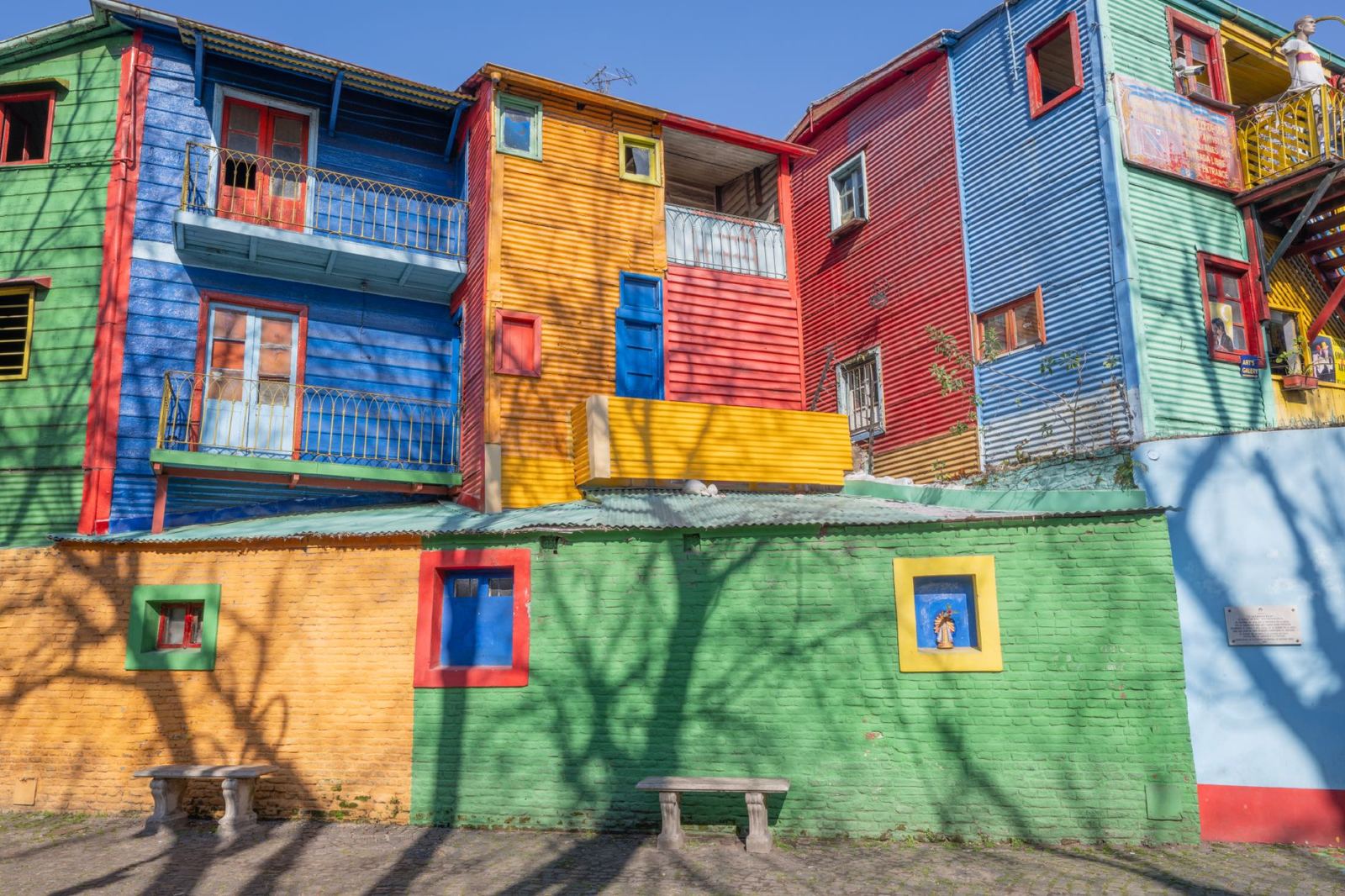
The city unravels neighbourhood by neighbourhood: San Telmo's antique dealers, Palermo's cafés and murals, Recoleta's belle époque grandeur, La Boca's painted tin houses. Economic turbulence is part of daily life — for the visitor, it means one of the world's most elegant cities is surprisingly affordable.
When to Go
The seasons are reversed: March–May (autumn) and September–November (spring, with the jacarandas in bloom) are the best windows — mild, clear and walkable. The December–February summer is humid and hot; in January the city goes on holiday and some venues close. Winter (June–August) is gentle, around 10–15°C — no obstacle to the theatre and tango season.
What to See & Do
Recoleta Cemetery sounds odd but is the city's most striking open-air museum: among the marble mausoleums lies Evita's tomb. Pair it with the cafés next door for half a day. El Ateneo Grand Splendid — a bookshop born from an old theatre — carries the title of the world's most beautiful bookshop with ease.
Sunday in San Telmo: the antiques market along Defensa street, street tango and the cafés of Plaza Dorrego merge into a single route. La Boca's Caminito is touristy but its colours are real — go by day and don't wander into the side streets. In Palermo Soho, murals, design shops and café life; the Palermo parks (rose garden, Japanese garden) are best by bike.
The acoustics of Teatro Colón rank among the world's finest; buy a ticket rather than a tour if you can — gallery seats are cheap. For tango, skip the tourist 'tango show' for a milonga (the locals' dance night); watching is welcome. Plaza de Mayo, the Casa Rosada and the cathedral form the square of political history. With time to spare, day-trip by commuter train to the Tigre delta, or take the ferry to the Uruguayan town of Colonia.
Food & Drink
Argentine beef defends its fame at every parrilla (grill house): bife de chorizo, entraña and tira de asado are the classics; 'jugoso' means rare. Alongside, Malbec — Mendoza's pride — is the table's other half.
The empanada is the national snack, every region boasting its own recipe; choose the baked (al horno) kind. The Italian migration legacy is serious: Buenos Aires pizza (thick, generously cheesed) and homemade pastas form a tradition of their own. Dulce de leche hides in every dessert; alfajores wait on every corner. Coffee culture lives in the historic 'cafés notables' — Café Tortoni is touristy but worth seeing. The merienda (late-afternoon tea) and restaurants empty before 10 p.m. explain the city's clock. Fernet and cola is the national cocktail of the young.
Practical Tips
Money matters are peculiar here: because of inflation and exchange-rate gaps, research the current situation before you travel — tourist exchange rates on cards, and changing dollars via Western Union, are periodically the best routes. Keep small notes.
The SUBE card covers the metro (Subte) and buses. The city is walkable but distances are large; use Uber/Cabify at night. Pickpocketing occurs in La Boca and busy tourist spots; don't leave your phone on the table. The porteño accent ('ll' sounding like 'sh') will surprise your ear on day one. Dinner before 9:30 p.m. counts as 'early' and a milonga at 1 a.m. as 'just getting started' — set your schedule accordingly. Many museums and restaurants close on Mondays.